
SOLUTIONS
DeepScout combines longitudinal abdominal CT and clinical information, while DeepClean improves image quality for more robust AI-assisted analysis.
MULTIMODAL ABDOMINAL AI
One clinical picture, built from signals that used to remain separate.
DeepScout is designed to analyze the liver, biliary tract, and pancreas together. It combines current and prior CT studies with clinical indicators to surface subtle patterns that can support earlier, more contextual clinical decisions.
SYSTEM ARCHITECTURE
One connected clinical intelligence layer.
 DEEPSCOUT
DEEPSCOUT
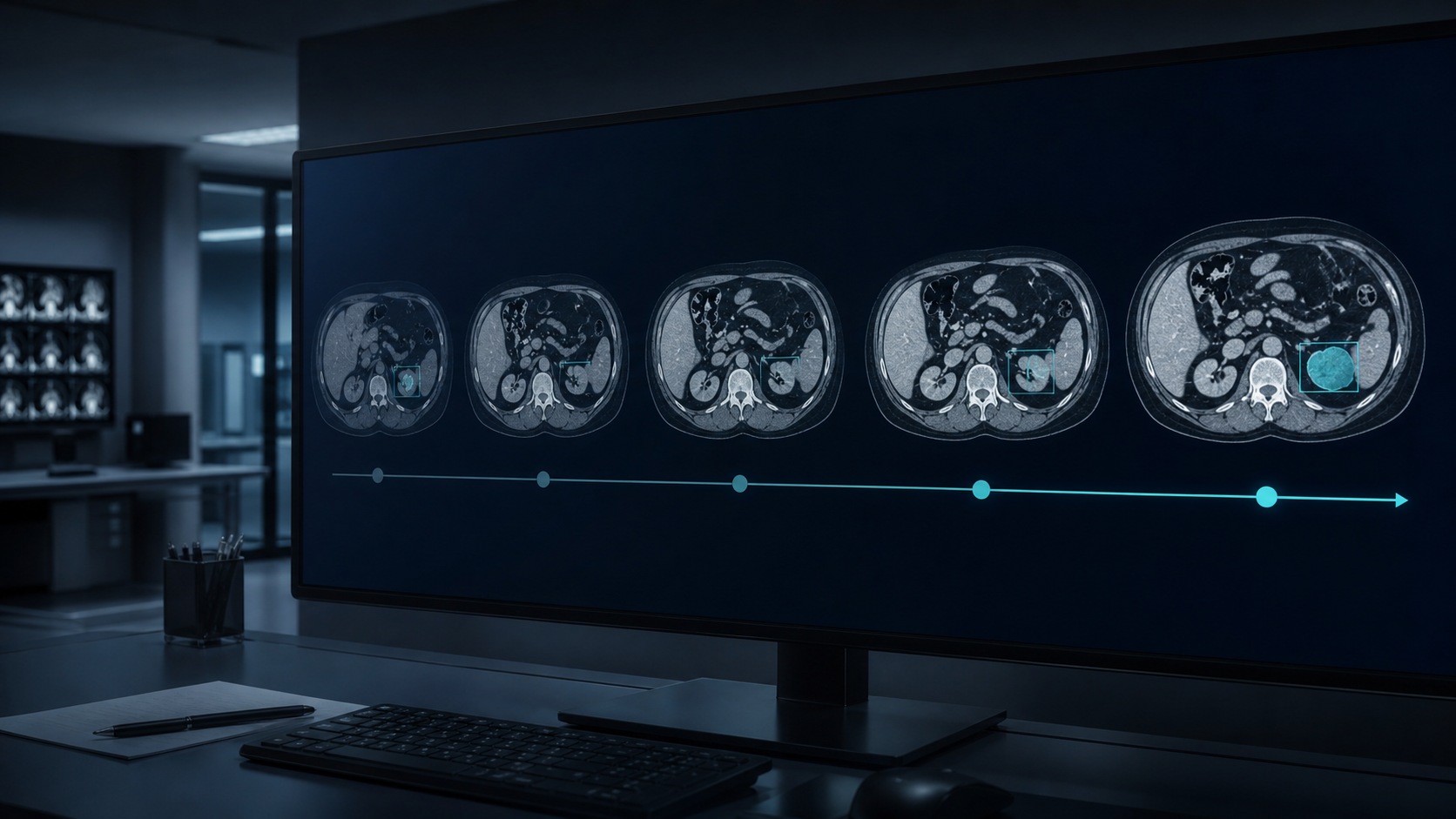
Pre-cancer stage-aware analysis
Longitudinal CT studies are evaluated together with relevant clinical information such as biomarkers, metabolic indicators, weight changes, and patient history. The goal is to recognize meaningful change before a single scan tells the whole story.
- Time-series imaging analysis
- Clinical indicator fusion
- Risk context and lesion localization support
MULTI-ORGAN CONTEXT
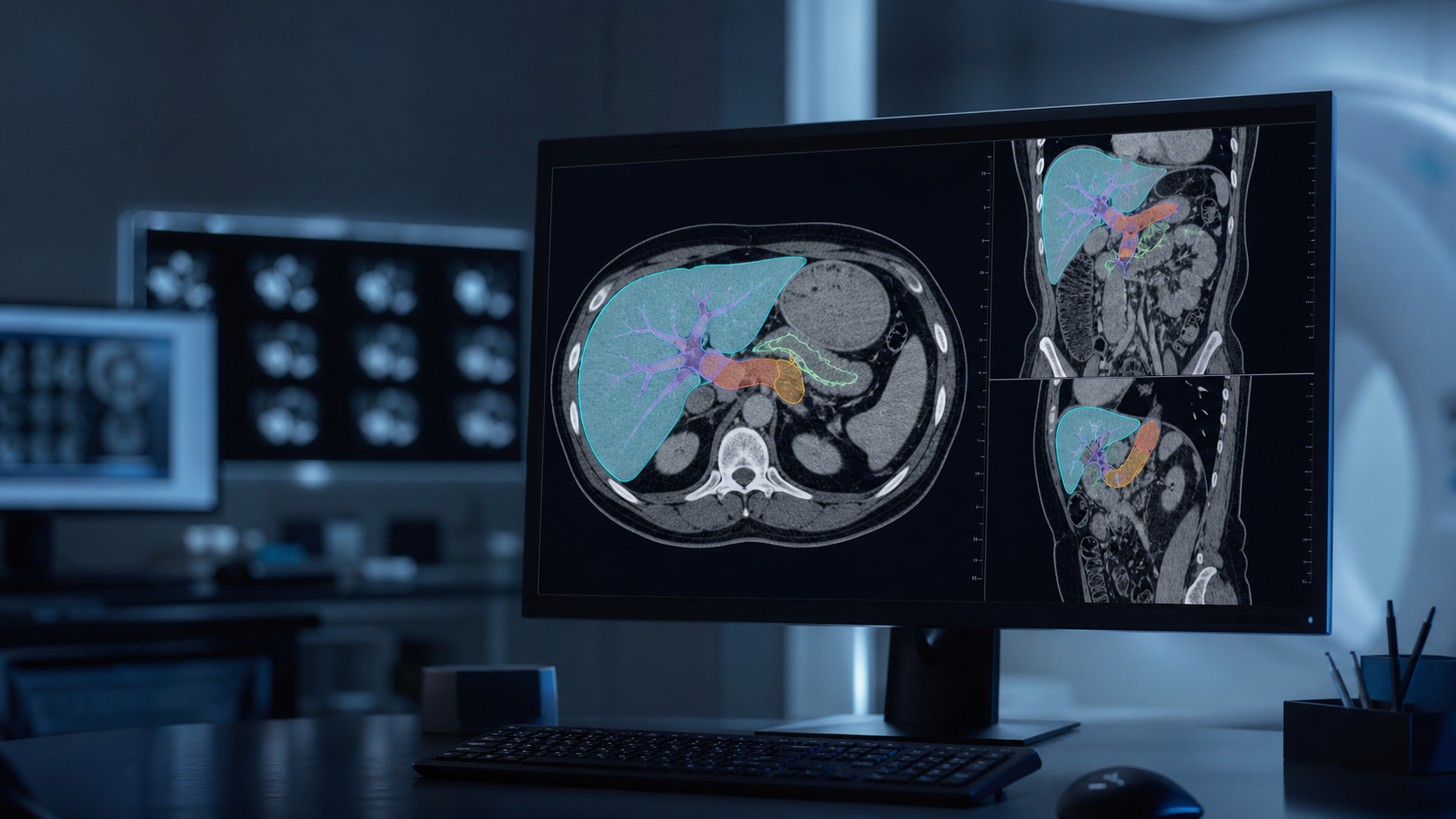
Liver, biliary tract, and pancreas in one relationship-aware view
Rather than treating each organ as an isolated task, DeepScout is designed around the clinical relationships across the upper abdomen. This integrated view supports a more complete assessment of hard-to-detect disease patterns.
- Abdominal multi-organ coverage
- Relationship-aware feature analysis
- Designed for connection with established PACS workflows
DEEPCLEAN
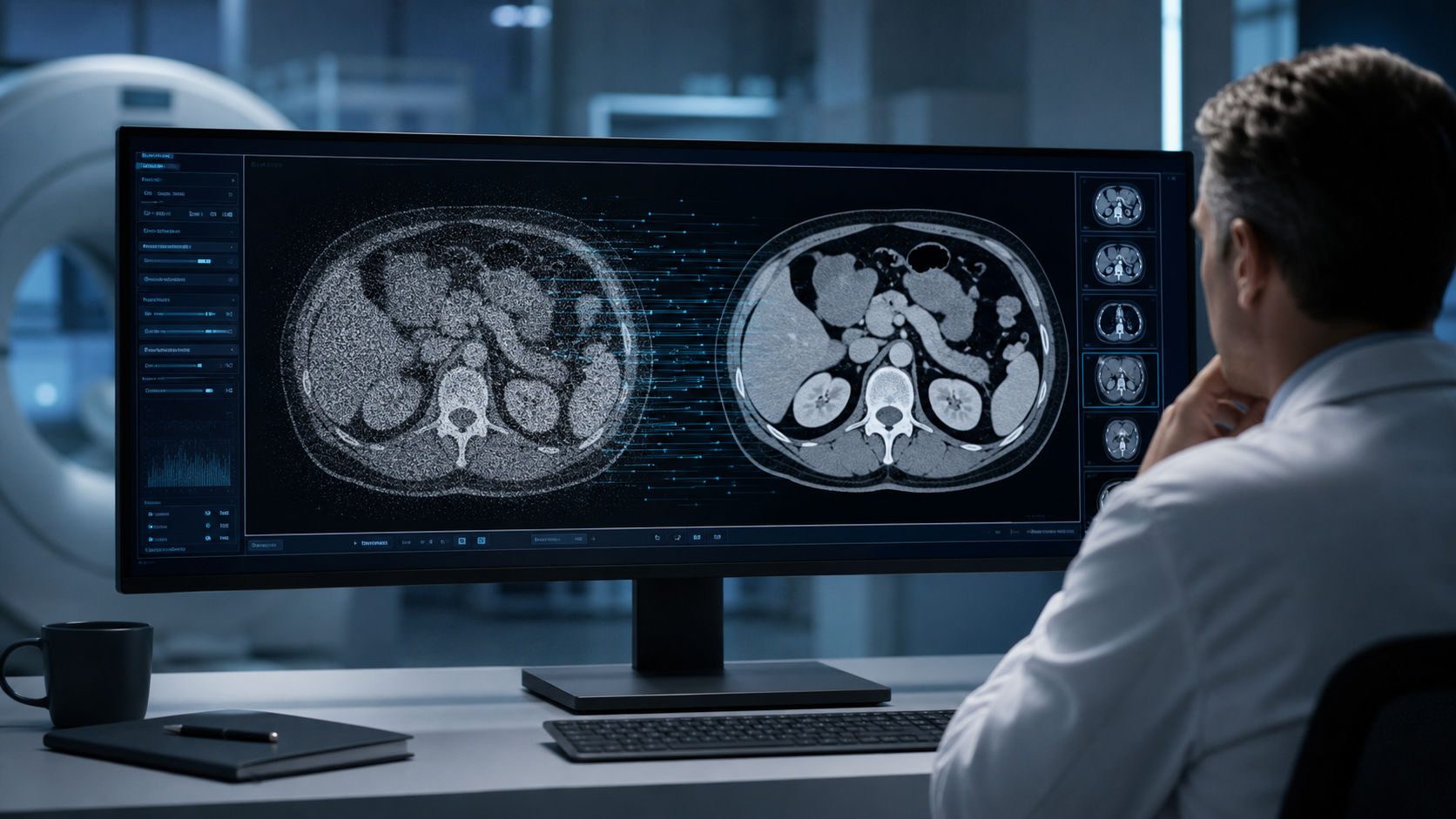
Robust image quality for reliable downstream analysis
DeepClean addresses noise, motion, and metal artifacts that can weaken both visual interpretation and AI performance. Guided image restoration is designed to preserve clinically relevant structures while improving the consistency of low-dose CT.
- Low-dose noise reduction
- Motion and metal artifact correction
- Structure-preserving image restoration
CLINICAL FLOW
From fragmented signals to actionable context.
- 01Collect
Current and prior CT studies with relevant clinical indicators
- 02Integrate
Multimodal and multi-organ relationship analysis
- 03Support
Risk context, lesion location, and clinically reviewable output